Communication skills
What is communication?
The imparting or exchanging of information by speaking or using some other medium and means of sending or receiving information
it
Learning objectives of Effective communication
Development of Interpersonal Skills
To express effectively & with maximum efficiency
Question-What is Writing?
Answer-Writing is a form of communication that allows students to put their feelings and ideas
on paper, to organize their knowledge and beliefs into convincing arguments, and to
convey meaning through well-constructed text. In its most advanced form, written
expression can be as vivid as a work of art.
1.Phrases- Phrases are a group of words that work together to communicate an element of
speech.
The following figure represents the differet types of phrases
What is a sentence?
A set of words that is complete in itself, typically containing a subject and predicate,
conveying a statement, question, exclamation, or command, and consisting of a main clause
and sometimes one or more subordinate clauses.
3.Parts of speech- A category to which a word is assigned in accordance with its syntactic
functions. In English the main parts of speech are noun, pronoun, adjective, determiner,
verb, adverb, preposition, conjunction, and interjection.
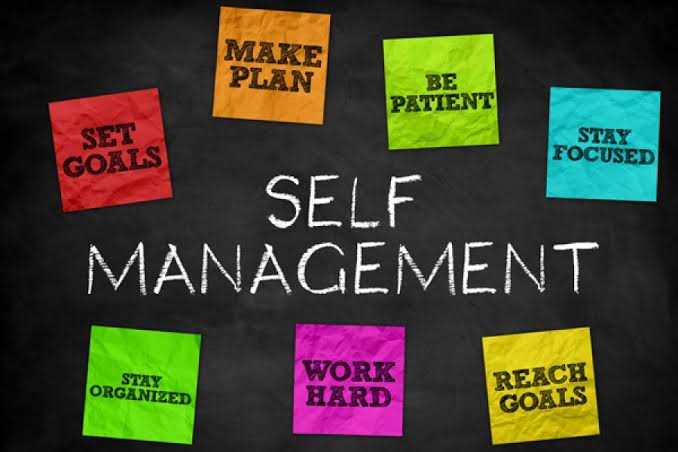
Self management skills
meaning and Importance of Stress Management
Stress Management refers to focusing human efforts for maintaining a healthy body and mind
capable of better withstanding stressful situations. Occasional stress is an unavoidable part of
one’s life. Stress refers to a “physical, mental, or emotional strain or tension”. Small amounts
of stress have a positive effect and they help us stretch ourselves to new level. High levels of
stress over prolonged periods need to be managed. A Stress well managed can help one view
events and situations as challenges and contributes in the growth of individual. Unmanaged
stress leads to anxiety and sorrow resulting in ill status of mental and physical health.
HiStress Causal Agents’ Categories
Mental: Students can be left overwhelmed, if they are unable to handle their assignment
submission deadlines and examinations grades. Overly high expectations from self can leave
one with chronic anxiety and stress.
Physical: As children grow up they may seek more independence, may become critically
conscious of their looks and have to cope up with hormonal changes. Issues related to general
well-being and health of an individual can lead to low self-esteem and cause stress.
Social : Discord amongst family members, peer pressure for doing things which kids will
generally avoid , maintaining balance in relationships amongst friends, status show off may lead
to stress at times.
Financial: Youngsters may have aspirational financial stress. This may of becoming
independent or Finances aspirational stress may
Importance of Stress Management
Being well versed with stress coping mechanisms helps people lead and healthy and happier
life. Adequately managed stress prevents medical and physical illnesses. Stress management is
vital because it leads to following benefits.
Improves mood
Boosts immune system
Promotes longevity
Leads to burst of physical strength, which is vital for goal achievement
Complete mental and physical engagement for task accomplishment
Increases efficiency and effectiveness
Prevents psychological disorders and behavioral problems
Stress Management Techniques
Stress is a mental state where one size doesn’t fit all, what stresses one person may not stress
others at all. It is highly individualistic phenomenon and the solution has to be customized to
individual’s mental state. Physical signs which may suggest stress are: breathlessness, dry
mouth, butterflies in stomach, indigestion, nausea, acidity, fatigue, sweaty palms, cold hands
and feet, irritation and hyperactivity etc.
Self-awareness amongst individuals for symptoms of stress will help them manage it better.
They should try understanding the cause, understanding self and taking remedial measures.
Avoiding the issues or procrastination is not the solution. Speaking out to the well-wishers like
family and friends is of help in stress management as they provide a social support system.
Apart from positive thinking, managing one’s time across any or a combination of the following
activities aids in stress management.
Physical Exercise
When stress affects the brain, rest of the body also feels the impact. Physical exercise in
the form of walking, skipping or for that matter indulging in any sports has been found
to relieve stress as they stabilize mood, improve self-esteem and induce sleep.
Yoga
Yoga is a school of Hindu philosophy reduces stress, which includes a series of postures
and breathing exercises practiced to achieve control of body and mind.
Meditation
It is a practice where an individual is supposed to focus his/her mind on a particular
object, thought or activity to achieve a calm mental state reducing stress.
Enjoying
Recreational activities like watching movies, attending concerts, playing games,
involving in adventure sports, singing, dancing or even sketching can help individuals
transcend to a happier mental state and help manage stress.
Going On Vacations with Family and Friends
Vacations provide an opportunity of taking a holiday from our routine and appreciate
different facets of life. Vacations can be taken up to friends and relatives place as well as
to far flung attractive locations. Vacationing helps in de-stressing individuals.
Taking Nature Walks
Taking nature walks in a pristine environment of a national park or a sanctuary or a trail
in country side / village, brings us a calmness by allowing our over stimulated minds a
chance to relax and helps us relax.
Importance of The Ability to Work Independently
Following benefits of working independently advocate its importance.
Ensures greater learning.
Individuals feel more empowered and responsible.
It provides flexibility to choose and define working hours and working mechanisms.
Failure and success of the task assigned are accounted by individuals.
Individuals become assets to organizations, groups and nations
It ensures creativity and satisfaction amongst individuals.
Enhancing Ability to Work Independently
Ability to work independently can be enhanced by being self-aware, self-motivated and self-
regulated. Let’s now learn what are these:
Self-Awareness
Having conscious knowledge of your own self, capabilities, feelings and one’s own character is
called as self-awareness. It helps individuals to chart their ways for working independently.
Self-Motivation
Self-motivated individuals have an inner urge to do something, achieve their goals without any
external pressure. It is a life skill and must be necessarily developed.
Self-Regulation
Self-regulation guides independent individuals as it helps them consider long term
consequences rather than just transient feelings. It leads to a responsible and a value driven
behavior.
Entrepreneurial Skills
Introduction
Entrepreneurship remains a new concept in terms of how it can be developed, what is needed
to practice entrepreneurship, how it can be beneficial for an individual etc. It is important to
understand what defines an entrepreneur. While some qualities and skills are observed in
successful entrepreneurs, an entrepreneur has to perform certain functions to form an
enterprise. There are pros and cons involved with choosing the entrepreneurial path. There
are many myths and fears that deter people from taking the entrepreneurial journey. In this
chapter, we will look at how entrepreneurship impacts society and has the potential to bring a
difference in the mindset and skill set of an individual.

Entrepreneurship Development
Entrepreneurship development is the process of strengthening the skills and knowledge of
budding and existing entrepreneurs by handholding them during their entrepreneurial
journey. It involves enabling entrepreneurs through structured training and institution-
building programs, which empowers them to run their business effectively and efficiently.
These programs are concerned with the study of entrepreneurial behavior, dynamics of
business planning and set-up and growth and development of the business.
Objectives of Entrepreneurship Development
The main aim of entrepreneurship development is to enlarge the base of entrepreneurs,
encourage overall entrepreneurial activity and catalyze the pace at which new ventures are
created. Some of the core objectives of entrepreneurship development include:
Assisting entrepreneurs in undergoing the process of entrepreneurship.
Handholding budding entrepreneurs to recognize and design unique business
opportunities.
Helping aspiring entrepreneurs start and grow dynamic businesses that provide high
value add.
Developing the motivational needs of entrepreneurs.
Training entrepreneurs to develop the required skills and gain knowledge for running
and managing a new business.
Supporting entrepreneur in creating effective business plans.
Providing incubation and acceleration to new ideas.
Aiding in the availability of technology or raw material.
Ensuring the infrastructure is adequate for entrepreneurial activities.
Providing financial assistance from banks and other financial institutions.
Creating a business environment and ecosystem that is suitable for entrepreneurship.
Implementing norms, rules and policies for establishment of new enterprises in the
dynamic economy.
Providing incentives, tax benefits and subsidies to new enterprises.
Encouraging research and development across industries.
Phases of Entrepreneurship Development
The process of entrepreneurship development is divided into three phases which are as
follows:
Stimulatory phase: This phase involves generating interest and awareness among potential
entrepreneurs. It is done by orienting them towards the meaning, process, benefits and
practice of entrepreneurship. It is called stimulatory phase because it includes activities which
stimulate the individual’s need, interest and motivation for being an entrepreneur.
Support phase: This phase is all about supporting the new ventures in their establishment by
mentoring, incubating, financing and advising the entrepreneurs. This includes providing
support across various activities such as registration of enterprises; designing the right
business model; development of the product prototype; arrangement of finance, land, shed
and power; offering management consultancy services, and marketing support; guidance for
selecting plant and machinery; and getting approvals and licenses etc.
Sustenance phase: In this phase, entrepreneurship development is focused on helping
enterprises to grow after they have been established. It helps in continuous and efficient
functioning of enterprises within a society. It includes activities such as modernization,
diversification, expansion, getting additional finance, and research and development support
to help an enterprise survive, develop and grow
GREEN SKILL
Main Sectors of the Green Economy
E-waste management
Green transportation
Renewal energy
Green construction
Water management
Green economy’s objective is to reduce environmental risks and ecological
scarcities that aim for sustainable development, without degrading the
environment. To achieve efficiency in energy usage, to development of new
environmental dependent business sectors such as food and tourism
The term “Green economy” was first coined in 1989, by a pioneering committee
in a report entitled ‘Blueprint for a Green economy ‘for the UK government, the
committee consisted of environment economists ( Pearce, mark,
Markendy,Barbier 1989)
Green economy is not just about wind turbine or solar farms, its next industrial
revolution. Green Economy provides opportunities for the environmental goods
and services Aims at achieving efficiency in resources, e.g. green homes will be
powered by new energy systems, other examples are ; development of ‘Green
Index’ and Green finance etc
Main Sectors of Green Economy
E-waste Management:
E waste comprises of discarded electronic devices. Which can be reused, resale,
salvaged, or recycled or disposed.
Green Transport:
Green transport refers to making efficient and effective use of resources,
modification of transport structure and making healthier travel choices. Green
transport factors in climatic and environmental impact globally. Green transport is
also termed as Smart transportation that supports and enhances walkable
urbanization. It reduces congestion, reduces our dependency on cars and foreign
oil, green transport is safer and less costly and helps save our planet.

Green construction:
Green construction is also referred as sustainable building; includes both the
structure and processes that are environmental friendly, responsible and resource
efficient through the building lifecycle i.e. from design, operation, maintenance
renovation and demolition.
Water Management:
Water management is also referred as optimization of water usage. It’s
management of water resources under a set of policies and regulation. Water
once an abundant natural resource is becoming a valuable resource, due to
draughts and over use.

Stakeholders of Green Economy
Key stakeholders and partner Organizations are ;
Government
Environmental protection and Natural resources committee.
Economic policy committee.
Agriculture Committee
Ministry of environment
Ministry of Energy and natural resources.
Ministry of Economic and natural Resources
Role of Government in Greening Economy
Government has important role for setting policies that serve, advance and
protect the public’s interest in transitioning towards an energy system that is
more sustainable from both a supply and environmental standpoint. Government
can play crucial role in helping to plug gaps by conducting research.
Private Agencies:
Amongst the many stakeholders involved in city development, the Private Sector
plays important part. In fact cities and private sector need each other; private
sector is required to develop alternative cities, create wealth and employment
and increase revenue resources through transparent and accountable taxation.
Private sector is a key player in strengthening city governance; private sector has
innovation potential to develop solutions that fit the new urban challenges.
The government focusses on the need for participative governance at local level
looking for private partnership at all levels of cities development process, from
planning and budgeting to implementing and monitoring.
 Site Title